|
|
|
Company
Profile
CompuLab is a leading manufacturer of "Computer
on Module" (CoM) boards.
CompuLab's products excel with an advanced set of features, outstanding
level of integration, high reliability and affordable prices.
CompuLab is the only company in the market focused on the
CoM business.
The attractiveness of
CompuLab's products is a key contributor to the fast growth of the company's sales - over
200% in the last three
years, while the embedded market was nearly flat. In 2006, annual
manufacturing exceeded 90,000 units, positioning CompuLab as a key player in
the CoM market, holding a share of approximately 20 percent.
System-on-Module Concept
Computer-on-Modules (CoM's) are tiny single-board computers, designed for mezzanine attachment as a "component" into a carrier
card developed by the user, according to his
application-specific needs.
CompuLab's product line comprising
CoM's based on several different processor architectures. Each module covers distinct range of price, performance and features, to create a line
of comprehensive solutions for the diverse requirements of various
industry sectors.
Features and benefits of
CompuLab's CoM's
- All-in-one single board computers with
CPU, memory and peripherals. Based on ARM, x86, Pentium and
Power PC processor architectures.
- Very small size, many modules are
smaller than a credit card.
- CAMI pinout, common for all CoM products, allowing module's interchangeability.
- NAND Flash Disk, implementing
large on-board storage at low cost.
- Comprehensive software packages,
drivers and support for all major operating systems.
- Built-to-order manufacturing
process. Users order and pay for only those functions actually
needed, further reducing the user's costs.
CompuLab
continues to expand its CoM line with
additional products and features, to keep it on the
leading edge of technological progress.
Company Facts
CompuLab began in 1992 as an engineering
consulting company and has made a gradual transition to its own
product
design and manufacturing. Today CompuLab sells to
more than 300 companies in 50 countries. Our products are used by international companies such as
Sierra Nevada, General Dynamics, General Electric and De La Rue Corporation.
CompuLab's engineering and
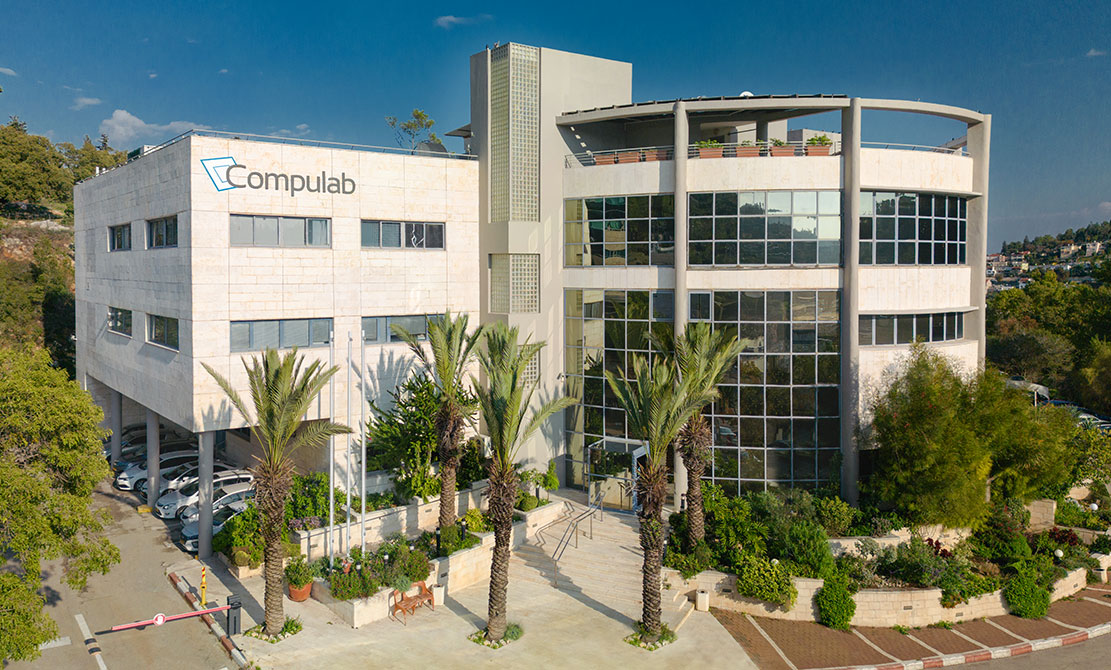
manufacturing facilities are located in Haifa, in the north of Israel. Sales
and technical support are provided directly from the Haifa offices, and
also through a network of authorized representatives.
CompuLab's support team has an excellent record in varied
fields of hardware and software engineering. The company has
proven itself as a reliable partner in delivering
efficient and fast support tailored to customers
needs. Our background
as both engineering consultants and board manufacturers
provides a unique advantage - we are able to understand customer's needs. Our engineers
follow up the development process of customer
products to ensure smooth integration into the customer's application.
History
| 1992 |
| > |
CompuLab
started as engineering consulting company. From 1992 to 1997,
the company developed about 40 custom products. |
|
| 1997 |
| > |
Introduced
the first series of Computer-on-Modules, based on Intel's i960
processor architecture. These modules gained several
significant design wins, but in general their popularity was
limited. |
|
| 1999 |
| > |
Introduced
the second generation of Computer-on-Modules, based on x86
architecture. The 486CORE - ElanSC400 based module, the first PC-compatible one,
gained immediate market acceptance and a large number of design
wins. CompuLab's sales and manufacturing rate started growing
at an exponential rate. |
|
| 2000 |
| > |
Introduced
operating systems suited for the 486CORE, including ready-to-run
images and board support packages for Linux, Windows CE,
VxWorks and other operating systems. |
| > |
Introduced the NAND Flash Disk Driver, allowing a large and
inexpensive file-system storage on-board. Since then, the NAND
Flash Disk has become one of the major contributors to the
popularity of the CORE product line. |
|
| 2001 |
| > |
Introduced
the CM-i586 (586CORE) module based on ElanSC520 |
| > |
Introduced
the CM-i786 (786CORE) based on
Pentium-III, and related baseboards and
software packages. |
|
| 2002 |
| > |
Introduced
the CM-i686 (686CORE) module and its support package. The Geode CSx200
-based CM-i686 immediately became a leading product with excellent market
response. |
|
| 2003 |
| > |
Introduced
the ARMCORE - the module based on Intel's XScale architecture, with ready-to-run packages for Linux
and Win CE, and the price starting below $50.
|
| > |
Introduced the CM-i886 (886CORE) - the most
powerful System-on-Module available in the market at the time, with a 1.26
GHz Pentium-III processor and 512MB SDRAM.
|
| > |
Introduced CAMI - CompuLab's
Aggregated Module Interface - the definition of
pinout, features and mechanical specifications shared by all new modules. |
|
| 2004 |
| > |
Introduced
the CM-X255, the next generation of popular ARMCORE module.
|
| > |
Introduced the third
generation of NAND Flash Disk Driver. |
| > |
Launched a
new assembling & testing lab, to satisfy the demands of
ever-growing manufacturing rate. |
|
| 2005 |
| > |
Introduced
CM-X270, advanced successor for popular CM-X255.
|
| > |
Introduced CM-iVCF, CoM based
on VIA's CPU. This module covers demands of mid-range to
high-end applications. |
| > |
Introduced CM-F82
based on Power PC architecture. |
| > |
Introduced new baseboard
concept comprising standard PC/104+ form factor and an
optional front panel. |
| > |
Started new assembling line,
with over $2M accumulative investment. All assembling was moved
in-house. |
|
| 2006 |
| > |
Introduced CM-iGLX - CoM
based on the new Geode LX processor. |
| > |
Introduced SB-iGLX - Geode
LX based PC/104+ with optional front panel. |
| > |
Introduced
CM-iPM - most powerful CoM based on Pentium M. |
| > |
Enhanced product features
(CM-X270 first) with WiFi wireless LAN interface. |
|
|
|